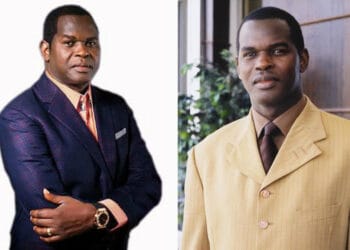
Dahiru Usman Bauchi biography explores the remarkable life of Nigeria’s revered Islamic scholar who died at 98. Learn about his children, family, teachings, and enduring legacy in Islamic education.
Who is Dahiru Usman Bauchi?
Dahiru Usman Bauchi biography tells the extraordinary story of one of Nigeria’s most influential Islamic scholars who dedicated nearly eight decades to teaching, preaching, and propagating Islamic knowledge. Sheikh Dahiru Usman Bauchi, born on June 29, 1927, and passed away on November 26, 2025, served as the supreme leader of the Tijaniyyah Sufi order in Nigeria until his death at age 98.
Known affectionately as Sheikh Dahiru Bauchi, this towering figure in Islamic scholarship spent over 70 years delivering Qur’anic exegesis, establishing hundreds of Islamic schools, and nurturing generations of students across Nigeria and West Africa. His life represented a bridge between traditional Islamic scholarship and modern religious dynamics, making him one of the most recognizable and respected clerics in Northern Nigeria.
Born in Nafada (now in Gombe State), Sheikh Dahiru came from a family deeply rooted in Islamic learning. His father, Alhaji Usman Adam, was a respected Qur’an reciter and Tijani muqaddam who laid the foundation for his son’s remarkable journey in Islamic scholarship. From memorizing the entire Qur’an before age 20 to becoming one of the world’s most celebrated Qur’anic interpreters, his life exemplified dedication to knowledge and spiritual service.
What distinguished Sheikh Dahiru Bauchi was not merely his scholarly achievements but his practical impact on millions of lives. He established the Sheikh Dahiru Usman Bauchi Foundation for philanthropic work, built over 1,000 houses for students and children across northern Nigeria, founded numerous Qur’anic schools, and performed Hajj 55 times and Umrah 205 times. His Ramadan tafsir broadcasts reached millions through multiple radio stations across the region.
Quick Profile of Sheikh Dahiru Usman Bauchi
| Personal Information | Details |
|---|---|
| Full Name | Sheikh Dahiru Usman Bauchi |
| Date of Birth | June 29, 1927 (Muharram 2, 1346 AH) |
| Date of Death | November 26, 2025 |
| Age at Death | 98 years (100 years by Islamic calendar) |
| Place of Birth | Nafada, Bauchi Province (now Gombe State) |
| Ethnicity | Fulani |
| Father | Alhaji Usman Adam (Gwani Alhaji Usman) |
| Mother | Hajiya Maryam Ardo Sule |
| Religious Position | Supreme Leader of Tijaniyyah in Nigeria |
| Official Title | Deputy Chairman, Fatwa Committee (NSCIA) |
| National Honor | Officer of the Federal Republic (OFR) |
| Children | 100+ (61-100 reported) |
| Grandchildren | 406+ |
| Great-Grandchildren | 100+ |
| Hafiz Children | 78 |
| First Marriage | 1948 (age 21) |
| Years of Teaching | 76+ years |
| Hajj Pilgrimages | 55 times |
| Umrah Pilgrimages | 205 times |
Early Life: Foundations in Islamic Scholarship
Sheikh Dahiru Usman Bauchi entered this world on June 29, 1927, corresponding to Muharram 2, 1346 in the Islamic calendar, in Nafada town, which was then part of Bauchi Province before the creation of Gombe State. His birth occurred during a period when Nafada served as a vibrant center of Islamic learning in Northern Nigeria.
Family Heritage and Lineage
Coming from pure Fulani parentage on both paternal and maternal sides, Sheikh Dahiru was born to Gwani Alhaji Usman Adam, a well-known scholar and Tijani muqaddam (leader), and Hajiya Maryam Ardo Sule, whose parents hailed from Gamazo in present-day Yobe State. In his own words during a 2019 interview, Sheikh Dahiru explained: “I am a Fulani man, likewise my four grandparents, being that every human being has four grandparents: two each from their paternal and maternal roots. In my own case, all of them were Fulani.”
His father, Alhaji Usman Adam, held significant influence as a muqaddam in the Tariqa Tijjaniyya Sufi order, having received authorization (ijāzah) for the tariqa. This spiritual lineage and religious authority would profoundly shape young Dahiru’s destiny and provide him with direct access to authentic Islamic knowledge transmission.
Childhood in a Center of Learning
Growing up in Nafada during its golden era as a hub for Islamic education exposed young Dahiru to an environment saturated with Qur’anic recitation, scholarly discourse, and spiritual devotion. His father’s position as a respected scholar meant their home was frequented by students and fellow scholars, creating an atmosphere conducive to learning and spiritual development.
The Tijaniyyah Sufi order, founded by Sheikh Ahmad Al-Tijjani, an 17th-century Algerian ascetic, had already established deep roots in West Africa through the efforts of various scholars. Sheikh Dahiru’s childhood coincided with the expansion of this spiritual movement across Northern Nigeria, and his family’s involvement placed him at the heart of this religious revival.
Educational Journey: Path to Scholarship
Early Qur’anic Education
The young Dahiru’s Islamic education began under the direct tutelage of his father, Alhaji Usman Adam. Following the traditional Islamic educational system prevalent in Northern Nigeria, he started by learning Arabic alphabets, progressing to Qur’anic recitation, and eventually embarking on the challenging journey of memorizing the entire Holy Qur’an.
Demonstrating exceptional memory and dedication, Dahiru Bauchi became a Hafizul Qur’an (one who has memorized the entire Qur’an) before reaching the age of 20. This achievement, accomplished through his father’s patient instruction, laid the foundation for his future career as one of the world’s most respected Qur’anic scholars and interpreters.
Advanced Studies Under Prominent Scholars
Following his father’s wise counsel to seek knowledge beyond their hometown, young Dahiru ventured to various centers of Islamic learning to deepen his understanding. He studied under several distinguished scholars including Sheikh Abdulkadir Zaria, Sheikh Usman Zangon Barebari, and Sheikh Abubakar Atiku. Each of these teachers contributed unique dimensions to his religious education.
Discipleship Under Sheikh Ibrahim Niasse
The most transformative relationship in Sheikh Dahiru’s educational journey was his connection with Sheikh Ibrahim Niasse of Senegal, the renowned 20th-century Tijani scholar who significantly popularized the Tijaniyyah order across West Africa. Their first meeting in Kano marked the beginning of a profound student-teacher relationship that would shape Sheikh Dahiru’s spiritual path and scholarly methodology.
Sheikh Ibrahim Niasse became his most influential teacher, guiding him deeper into the Tijaniyyah tradition and refining his understanding of Islamic spirituality. This connection was so significant that Sheikh Dahiru later married the daughter of Sheikh Ibrahim Niasse, with the ceremony officiated by Sheikh Baba Laminu Niasse at the Ibrahim Niasse Mosque in Kaolack, Senegal. This marriage strengthened the spiritual and scholarly ties between the two families and the broader Tijaniyyah community.
Teaching Career: Seven Decades of Service
Beginning of Public Tafsir
Around 1948, at approximately age 21, Sheikh Dahiru Bauchi began delivering public Qur’anic exegesis (tafsir), marking the start of what would become a 76-year journey of teaching and spiritual guidance. His tafsir sessions provided not merely translation of Qur’anic verses but comprehensive commentary on scripture, offering moral, spiritual, and social guidance grounded in the Qur’an and Hadith.
His approach to tafsir combined deep textual knowledge with practical application, making complex religious concepts accessible to ordinary Muslims while maintaining scholarly rigor. This methodology attracted students from across Northern Nigeria and eventually throughout West Africa.
Radio Broadcasting and Mass Reach
The impact of Sheikh Dahiru’s teachings expanded exponentially when his tafsir began airing on Bauchi Radio Corporation in 1976. Four years later, in 1980, Radio Nigeria Kaduna started broadcasting his sessions, bringing his voice into countless homes across the region. During Ramadan, his sessions drew thousands physically to the broadcasting venues while reaching millions through radio waves.
For many Northern Nigerians, the sound of Sheikh Dahiru’s voice became synonymous with the holy month of Ramadan. His broadcasts continued for decades, with numerous radio stations across northern Nigeria airing his teachings, especially during Ramadan. These broadcasts played a crucial role in Islamic education for people who couldn’t access formal religious schooling.
Establishment of Islamic Institutions
Beyond broadcasting, Sheikh Dahiru founded numerous Qur’anic schools (tsangaya), memorization centers, and mosques across Northern Nigeria and beyond. His home in Kofar Gombe area of Bauchi metropolis became both a spiritual center and a functioning school, described as “a beehive of seekers of knowledge.”
When faced with criticism about the almajiri system (traditional Qur’anic boarding schools) being associated with child begging, Sheikh Dahiru responded constructively by establishing schools within towns where parents resided, enabling parents to contribute to their children’s upkeep. This practical solution demonstrated his ability to adapt traditional systems to contemporary challenges while maintaining educational standards.
Family Life: A Dynasty of Qur’anic Knowledge
Marriages and Children
Sheikh Dahiru Bauchi first married in 1948 at age 21, beginning what would become one of the most remarkable family lineages in Islamic scholarship. Over his lifetime, he married multiple wives in accordance with Islamic tradition and fathered an extraordinarily large family that became a living testament to Qur’anic education.
Different sources report varying numbers regarding his children, with reports ranging from 61 to over 100 biological children (with one detailed account citing 95 children – 48 females and 47 males). This discrepancy likely reflects different counting methods or times of documentation. What remains consistent across all accounts is the exceptional nature of this family and their dedication to Islamic learning.
The Hafiz Legacy
The most remarkable aspect of Sheikh Dahiru’s family is the transmission of Qur’anic knowledge through generations. According to detailed accounts, 78 of his children had memorized the complete Qur’an, becoming Hafizul Qur’an themselves. This represents an unprecedented achievement in Islamic education and demonstrates the Sheikh’s success in instilling love for Qur’anic knowledge in his household.
Multi-Generational Scholarship
His 406+ grandchildren included over 199 who had committed the Qur’an to memory, while 12 of his 100+ great-grandchildren had also achieved Hafiz status. Professor Khalid Abdullahi Zaria, who authored a Hausa book titled “Shehu Dahiru Bauchi Ginin Allah” (Sheikh Dahiru Bauchi, the Edifice of Allah), documented these remarkable statistics, noting that the family balanced both Islamic and Western education.
The Sheikh’s home became a living example of multigenerational scholarship, where children, grandchildren, and great-grandchildren learned together, creating a unique educational ecosystem. This family structure ensured that his legacy of Qur’anic knowledge would continue for generations beyond his lifetime.
Notable Family Members
Among his children, several have become prominent in their own right. Naziru Dahiru declared his intention to run for Governor of Bauchi State in the 2027 election, positioning himself as a candidate continuing his father’s values while engaging with contemporary governance. Sayyadi Ali Dahiru Usman Bauchi confirmed his father’s death from Madinah, highlighting the family’s continued connection to Islamic holy sites.
Major Life Achievements and Contributions
Hajj and Umrah Pilgrimages
Sheikh Dahiru Bauchi’s devotion to Islamic practice was exemplified by his extraordinary pilgrimage record: he performed Hajj (major pilgrimage) 55 times and Umrah (lesser pilgrimage) 205 times. These numbers are exceptional even by the standards of devoted Muslims and demonstrate both his spiritual dedication and physical endurance well into advanced age.
Philanthropic Infrastructure
Through the Sheikh Dahiru Usman Bauchi Foundation, he engaged in extensive philanthropic activities. He provided over 1,000 houses in Bauchi and Kaduna States, among other northern states, for his children and students to live in free of charge. This massive housing initiative addressed practical needs while creating communities of learning centered around Islamic knowledge.
He also established numerous Islamic schools and farmlands, creating sustainable systems for education and livelihood. These institutions continue to operate, providing education to thousands of students annually and ensuring food security for religious students.
Advocacy and Social Impact
Sheikh Dahiru was widely recognized for his courage in speaking against tyranny, corruption, and social ills including immorality, cultism, and drug abuse. His advocacy for national unity and peace earned him respect beyond religious circles, with political leaders frequently seeking his counsel and blessings.
During the farmer-herder crisis in 2018, he provided nuanced perspective, arguing that the violence had no religious roots and warning against broadly blaming the Fulani community. “Fulani are not new in Nigeria. If they were killers, they would have started hundreds of years ago,” he told journalists, demonstrating his commitment to truth over ethnic solidarity.
Conversions to Islam
His wisdom in preaching led countless individuals to embrace Islam, particularly during Ramadan when his tafsir sessions attracted both Muslims and non-Muslims. His approach emphasized worshipping only Allah, seeking forgiveness, expressing gratitude for divine blessings, and sending salutations to Prophet Muhammad (peace be upon him).
Timeline of Key Events
| Year | Event | Significance |
|---|---|---|
| June 29, 1927 | Born in Nafada | Beginning of life |
| Before 1945 | Memorized entire Qur’an | Became Hafizul Qur’an |
| 1948 | First marriage and began public tafsir | Start of family and teaching career |
| 1950s-1960s | Studied under Sheikh Ibrahim Niasse | Deepened Tijaniyyah knowledge |
| 1976 | Tafsir broadcasts began on Bauchi Radio | Expanded reach through media |
| 1980 | Broadcasts on Radio Nigeria Kaduna | National platform achieved |
| 2009 | Detained in Saudi Arabia during Hajj | Interfaith tensions incident |
| 2021 | Met President Muhammadu Buhari | Discussed national unity |
| June 2024 | Reached 100 years (Islamic calendar) | Centenary celebration |
| November 26, 2025 | Passed away in Bauchi | End of earthly journey |
| November 28, 2025 | Funeral prayer in Bauchi | Islamic burial rites |
Religious Leadership and Positions
Supreme Leader of Tijaniyyah in Nigeria
Sheikh Dahiru Bauchi served as the supreme leader of the Tijaniyyah Sufi group in Nigeria, one of the largest Islamic spiritual orders in the country with millions of adherents. This position made him the spiritual guide for countless Muslims following the Tijaniyyah path, giving him enormous influence over religious practice and interpretation.
His leadership of the Tijaniyyah was characterized by emphasis on peaceful practice, regular Qur’anic study, and adherence to Islamic principles. Notably, his followers have never been found among extremists or terrorists, reflecting the peaceful nature of his ministry and teaching.
Deputy Chairman, Fatwa Committee (NSCIA)
He served as Deputy Chairman of the Fatwa Committee of the Nigerian Supreme Council for Islamic Affairs (NSCIA), the highest Islamic decision-making body in Nigeria. This position involved issuing religious rulings on contemporary issues facing Nigerian Muslims and contributing to Islamic jurisprudence at the national level.
Recognition as Global Scholar
His profound knowledge led to recognition as a Professor of Qur’anic memorization and education, and he was honored as one of the world’s greatest Mufassirun (interpreters of the Qur’an). This international recognition placed him among the elite scholars of Islamic knowledge globally.
Death and Legacy
Final Days
After a prolonged illness, Sheikh Dahiru Usman Bauchi was taken to the Abubakar Tafawa Balewa University Teaching Hospital in Bauchi on the night of November 26, 2025. He had been receiving visitors at his residence earlier that evening, maintaining his characteristic accessibility to followers until the very end.
He passed away in the early hours of Thursday, November 27, 2025, at the hospital. His son, Sayyadi Ali Dahiru Usman Bauchi, confirmed the news from Madinah, stating simply that the Sheikh “has returned to his Creator.”
Funeral and Tributes
The funeral prayer was held on Friday, November 28, 2025, in Bauchi, in accordance with Islamic rites. The ceremony drew thousands of followers, students, and admirers who came to pay their final respects to the revered scholar.
Tributes poured in from across Nigeria and beyond. Former Military Head of State General Abdulsalami Abubakar described him as “a towering figure in Islamic scholarship.” Governor Bala Mohammed of Bauchi State called him “a man of deep faith, humility, and wisdom” whose life was devoted to teaching the Qur’an and propagating Islam.
Religious leaders, traditional institutions, political figures, and millions of followers across West Africa mourned his passing, recognizing the immense void his death created in Islamic scholarship and spiritual guidance.
Enduring Legacy
Sheikh Dahiru Bauchi left behind an unparalleled legacy:
Educational Legacy: Hundreds of Islamic schools, thousands of students trained, and millions reached through broadcasts
Family Legacy: A dynasty of Qur’anic scholars with 78 Hafiz children, 199+ Hafiz grandchildren, and continuing generations
Spiritual Legacy: Peaceful interpretation of Islam that produced no extremists despite millions of followers
Physical Legacy: Over 1,000 houses, numerous mosques, and farmlands supporting Islamic education
Intellectual Legacy: 76 years of tafsir providing comprehensive Qur’anic interpretation for contemporary Muslims
His teachings, recorded and preserved, continue to guide Muslims across West Africa. His approach to Islamic education, balancing traditional knowledge with contemporary needs, provides a model for religious scholarship in modern Nigeria.
Net Worth and Wealth
While exact figures for Sheikh Dahiru Bauchi’s net worth were never publicly disclosed, estimates have placed his wealth at approximately $20 million. However, this figure is difficult to verify and should be understood in context.
His wealth was not accumulated through business ventures but rather consisted of:
- Over 1,000 properties (houses) in Bauchi, Kaduna, and other northern states
- Multiple Islamic schools and educational facilities
- Farmlands supporting students and family
- Donations and support from followers and admirers
Importantly, Sheikh Dahiru used his resources primarily for philanthropic purposes, providing free housing for students and children, funding Islamic education, and supporting the poor and wayfarers. His generosity to followers, assistants, and needy individuals was legendary.
Interesting Facts About Sheikh Dahiru Bauchi
1. Centenary Achievement He reached 100 years of age according to the Islamic lunar calendar in 2024, though he was 97 by the Gregorian calendar at that time.
2. Extraordinary Pilgrimage Record His 55 Hajj pilgrimages and 205 Umrah pilgrimages represent one of the highest pilgrimage counts for any Nigerian scholar.
3. Media Pioneer He was among the first Islamic scholars in Northern Nigeria to embrace radio broadcasting for religious education, starting in 1976.
4. Peaceful Influence Despite having millions of followers, none have been linked to extremism or terrorism, demonstrating the peaceful nature of his teachings.
5. Multi-Generational Qur’anic Dynasty He is likely the only scholar in history with 78 children, 199+ grandchildren, and 12+ great-grandchildren who are all Hafizul Qur’an.
6. Longevity in Teaching His 76 years of delivering tafsir represents one of the longest continuous teaching careers in Islamic scholarship globally.
7. Saudi Arabia Detention He was detained in 2009 during Hajj due to doctrinal disputes among Nigerian Islamic groups, but was later released.
8. National Honor He received the Officer of the Federal Republic (OFR) national honor for his contributions to Nigeria.
Impact on Islamic Education
Sheikh Dahiru Bauchi fundamentally transformed Islamic education in Northern Nigeria through several innovations:
Accessibility: His radio broadcasts made Qur’anic education accessible to millions who couldn’t attend traditional schools
Systematization: He created structured approaches to Qur’anic memorization and interpretation
Family Integration: He demonstrated that large families could be effectively educated to high Islamic standards
Modernization: He adapted traditional teaching methods to contemporary needs while maintaining authenticity
Peaceful Coexistence: He promoted Islamic knowledge that fostered tolerance and unity rather than division
His influence extended beyond Nigeria to other West African countries where the Tijaniyyah order has significant presence, including Senegal, Mali, Niger, and Cameroon.
Conclusion
Dahiru Usman Bauchi biography represents the life story of an extraordinary Islamic scholar who dedicated 98 years to the service of Allah, Islamic education, and humanity. From his birth in Nafada in 1927 to his death in Bauchi in 2025, his life spanned nearly a century of profound impact on Islamic scholarship and practice in Nigeria and West Africa.
His legacy lives on through his massive family of scholars, the hundreds of schools he established, the thousands of students he trained, the millions he reached through broadcasts, and the peaceful interpretation of Islam he embodied. He proved that Islamic scholarship could thrive in modern times while remaining rooted in authentic tradition.
Sheikh Dahiru Bauchi will be remembered as more than a scholar; he was a spiritual guide, a teacher of nations, a builder of institutions, and a champion of peace and unity. His life demonstrated that true religious leadership combines deep knowledge with practical service, spiritual devotion with social responsibility, and traditional values with contemporary relevance.
As Nigeria and the Muslim world mourn his passing, they also celebrate a life fully lived in submission to Allah and service to humanity. His voice may have fallen silent, but his teachings, preserved in recordings and carried forward by his students and descendants, will continue to guide and inspire generations to come.
Frequently Asked Questions
Sheikh Dahiru Usman Bauchi passed away on November 26, 2025, at Abubakar Tafawa Balewa University Teaching Hospital in Bauchi after a prolonged illness, aged 98 years.
He had between 61 to over 100 children from multiple marriages, with 78 of them having memorized the entire Qur’an to become Hafizul Qur’an themselves.
He was renowned as the supreme leader of Tijaniyyah in Nigeria, a prolific Qur’anic scholar who taught for 76 years, and established hundreds of Islamic schools across Northern Nigeria.
He performed Hajj (major pilgrimage) 55 times and Umrah (lesser pilgrimage) 205 times throughout his lifetime.
He was born in Nafada, originally part of Bauchi Province but now located in Gombe State, Northern Nigeria, and resided in Kofar Gombe area of Bauchi metropolis.
He was 98 years old according to the Gregorian calendar, but had reached 100 years according to the Islamic lunar calendar in 2024.